What Determines the Value of a 50 Euro Cent Coin
Beyond denomination: grading, minting, and demand.
Physical worth regarding a 50 euro cent piece depends on technical parameters and shifting market climates.
Standard payment tools lose purchasing power due to inflationary pressure.
The 50 euro cent coin value relies heavily on emission volumes in a given year.
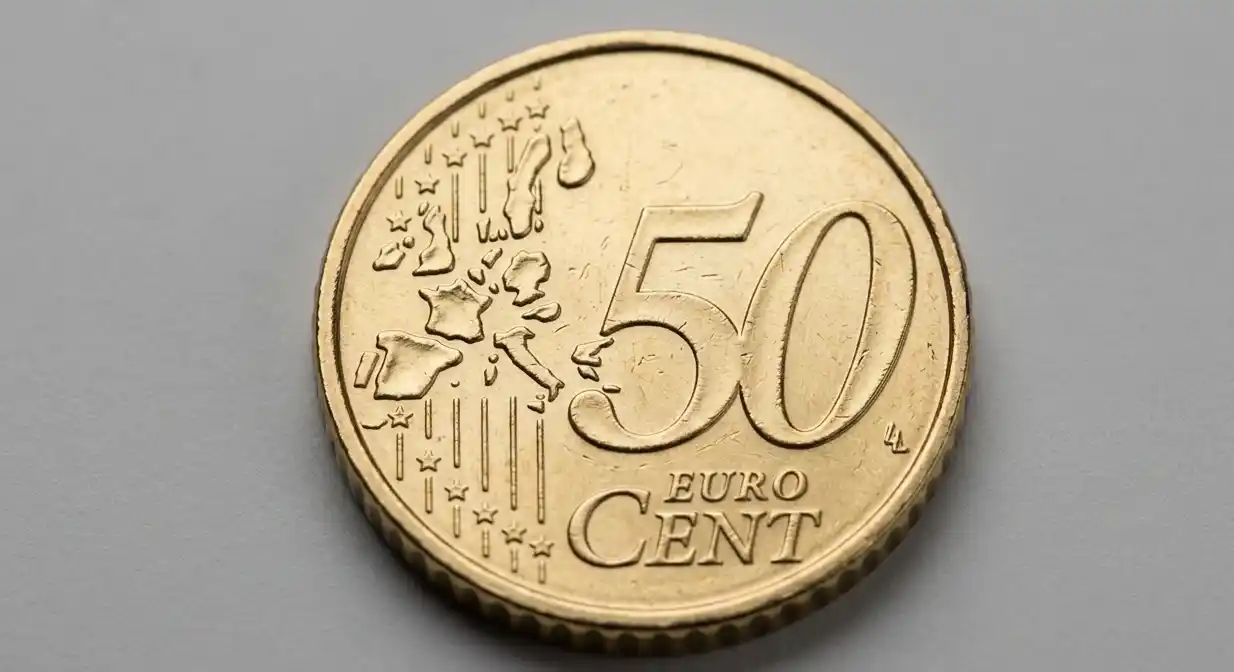
Feature | Data |
Mass | 7.80 g |
Diameter | 24.25 mm |
Thickness | 2.38 mm |
Shape | Round |
Edge | Coarse milled |
Alloy Composition | Copper 89%, Aluminum 5%, Zinc 5%, Tin 1% |
This alloy possesses high resistance to corrosion.
Actual gold content absence is confirmed by chemical testing.
Magnetic properties remain completely nonexistent in this specific metal mix.
Mintage Impact on Market Premiums
Issue volume determines object scarcity within the marketplace.
Countries with minimal strike quotas create natural deficits.
Price evolution for rare issues during the 2020–2026 period:
Monaco 2006 → Mintage 11,180 pieces → Price 480€
Vatican 2002 → Mintage 65,000 pieces → Price 195€
San Marino 2003 → Mintage 70,000 pieces → Price 45€
Andorra 2014 → Mintage 95,000 pieces → Price 38€
Annual price growth for rare mintages averages 5%–8%.
Massive German or French issues are valued strictly at face value.
Finding rare specimens with the coin identifier app free in general circulation is practically possible.
Surface Degradation and Grading Standards
Mechanical impact during circulation lowers the preservation category.
Professional certification utilizes the Sheldon scale to define wear levels.
Value loss process due to defects: Lustre presence → Micro-scratch appearance → Map relief wear → Fine star detail loss → Matte oxidation buildup.
Price reduction based on wear level:
Category MS65 (Perfect) → 100% of market price
Category AU58 (Almost uncirculated) → 60% of market price
Category XF45 (Extremely fine) → 25% of market price
Category VG8 (Very good) → Face value only
Dirt and grease deposits on the metal trigger irreversible chemical reactions.
Cleaning a coin with abrasive substances voids its collective significance entirely.
Geographical Origins and Mint Marks
Different production sites leave unique imprints on execution quality.
Germany distributes orders among five state-owned enterprises.
German mint letter designations:
A — Berlin
D — Munich
F — Stuttgart
G — Karlsruhe
J — Hamburg
Strike detail quality at the Karlsruhe facility remains statistically superior.
French 2002 coins feature two distinct mint director marks.
Mark changes mid-year create subtypes with varying valuations.
Production Errors and Anomalies
Minting mistakes transform common payment tools into unique artifacts.
Edge milling absence occurs in 1 out of every 10,000,000 pieces.
Error types and 2025–2026 auction prices:
Image shift over 15% → 120€
Struck on wrong denomination planchet → 850€
Rotated double strike → 400€
Missing ring part due to die clogging → 15€
Interest in errors stems from their non-repeatable nature.
Error forgery is easily detected by examining metal structure under a microscope.
Foreign objects falling into the press create uniquely shaped indentations.
Design Transitions and Historical Phases
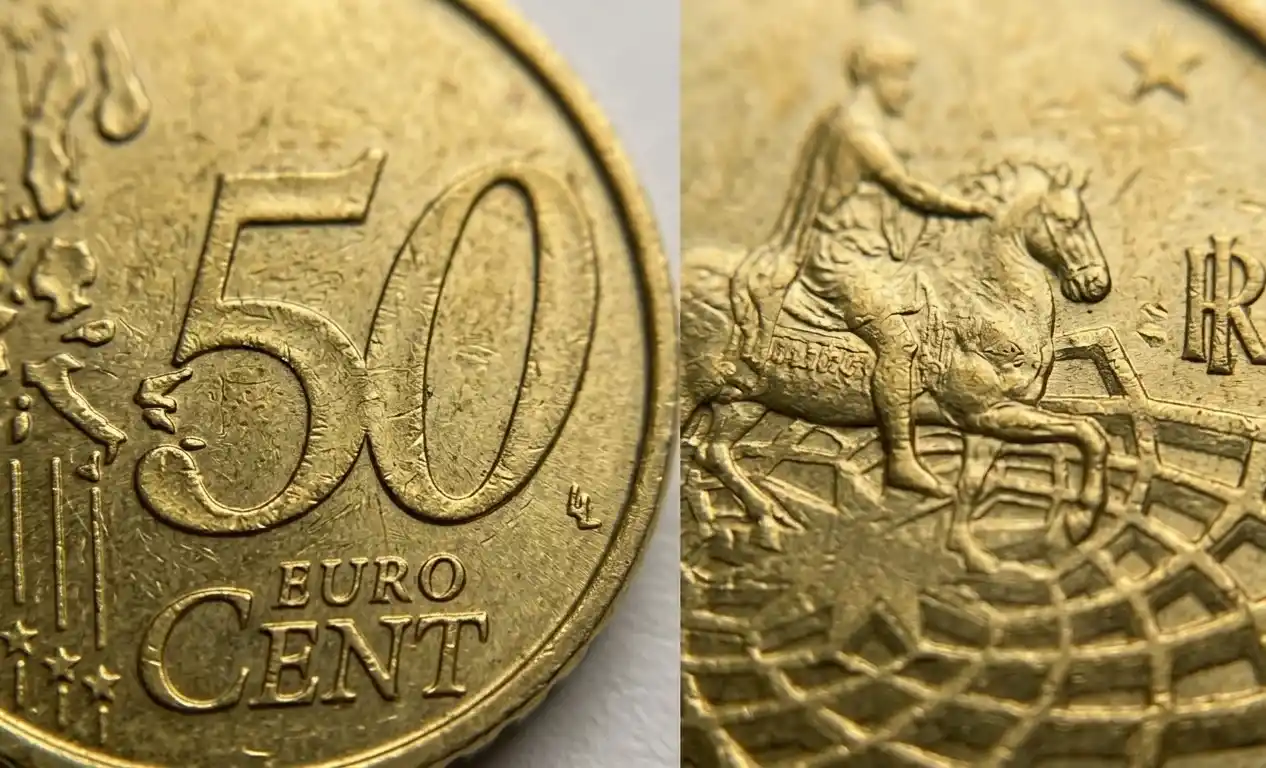
Reverse map imagery underwent significant changes in 2007.
European Union expansion necessitated updated cartographic data.
2002–2006 Design → EU countries depicted with clear borders.
Post-2007 Design → Common European map without internal state borders.
Old design types are gradually withdrawn by central banks.
Old sample coin share in 2026 circulation sits below 12%.
Preservation and Decay Prevention
Surrounding environments aggressively attack the copper-aluminum alloy.
Moisture and sulfur in the air cause surface darkening.
Protection methods:
Vacuum capsules made of inert plastic
PVC-free album pages
Humidity-controlled safes
Don’t forget to check the coin regularly with the coin value checker
Skin contact leaves sweat and oil traces.
Acid in sweat secretions corrodes polished surfaces.
Cotton glove usage is mandatory during inspections.
Comparative Value Analysis by Country
Availability for different national coins in circulation varies significantly.
Prevalence and base price table for Uncirculated coins:
Country | Prevalence | 2026 Price |
Finland | Low | 6.50€ |
Greece | Medium | 2.20€ |
Luxembourg | Low | 4.80€ |
Slovenia | Low | 3.10€ |
Ireland | Medium | 1.50€ |
Finnish coins are prized due to small early 2000s mintages.
Greece frequently ordered strikes from other nations, marking them with letters in stars.
Letter S in a Greek coin star indicates Finnish production.
Certification Procedures and Profitability
Authenticity and grade confirmation increases market attractiveness.
Grading company service costs average around 40€–60€ per item.
Procedure feasibility depends on the expected grade.
Profit calculation: Monaco 2006 (Raw) → 350€ Shipping and insurance costs → 55€ Final price with MS66 grade → 520€ Net profit from certification → 115€
Economic sense is absent for common French or Spanish coins.
Certified coins sell more easily on international digital auctions.
Market Trends
Numismatic markets demonstrate resilience against global economic crises.
Thematic country-based collection popularity continues growing.
Price change forecast until 2030:
Rare micro-states → +25%
Minting errors → +15%
Official annual sets → +10%
Common circulation coins → 0%
Interest in 50 cent pieces is sustained by their large size and detailed relief.
Nordic Gold metal maintains a presentable appearance longer than copper pieces.
Counterfeit Protection Technologies
Forgerers rarely faked 50 cent denominations due to low profitability.
High-quality copies appear among rare Monaco dates.
Verification methods:
Weight checking with 0.01g precision
Metal conductivity measurement
Map micro-font comparison with standards
Genuine coins possess sharp relief edges.
Cast fakes differ through rounded edges and porous surfaces.
Sound from a genuine coin hitting a hard surface must be clear and ringing.
Value Factor Hierarchy
Characteristic summation allows for value formula derivation.
Factor priority:
Mintage and origin country
Surface condition
Minting error presence
Authorized laboratory certification
Key element absence drops the price several times over.
Circulated rare date coins cost 10 times less than perfect specimens.
2026 market demands flawless quality for high investment results.
Local Markets and Influence
Prices across European countries vary by 15%–20%.
German demand for own rare mint marks exceeds the European average.
Portuguese collectors pay premiums for their own national coins.
Platform influence on price:
Local collector club → Minimum price
National auction → Average price
International platform → Maximum price
Globalization allows price leveling through internet trading.
Transport costs and taxes remain a limiting factor.